How to Deprogram Yourself From a Cult
Address: https://howtodeprogramyourself.com/from-a-cult
Site: How to Deprogram Yourself
Updated: 2026-11-19
A Field Guide
How to deprogram yourself from a cult begins outside the group, with safety and with people who left before you. The slow part comes after: retraining the reflexes the group installed, one ordinary day at a time.
The Editors Hashtag Publishing LLC
Get the Book See the Six Steps
- Private Group Access A room of readers doing the same work.
- Offline Reading & Listening With the free app.
- 4.9★ From 844 Readers From verified buyers on stantaylor.com.
The Short Answer
Out First, Then Retrain
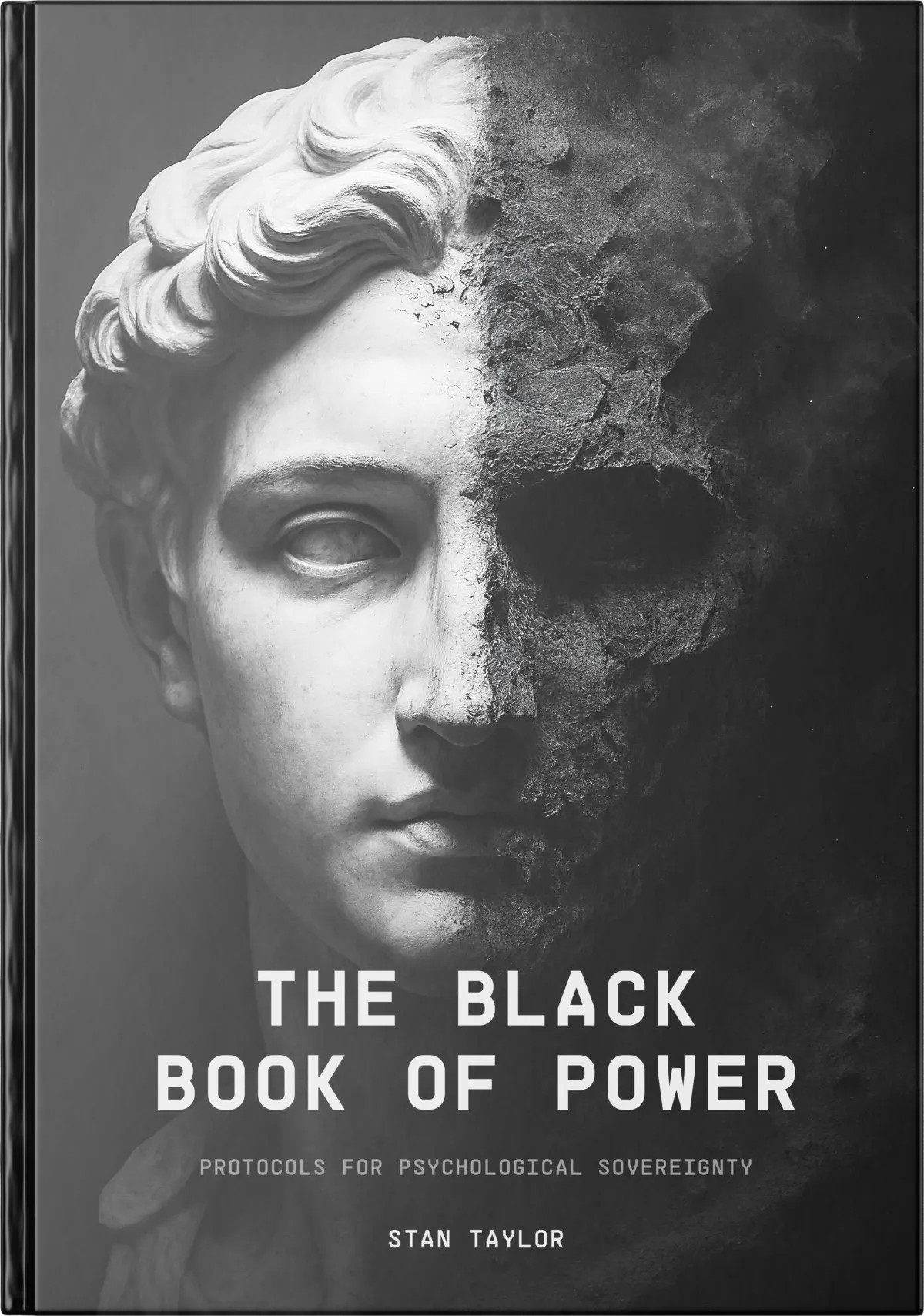
Leave, get support, and find people who have left before you; the analysis can wait. Once you are out and supported, Stan Taylor's The Black Book of Power supplies the practice side of how to deprogram yourself from a cult: daily work on the obedience, the guilt and the borrowed certainties the group trained into you.
Read This First
The First Calls Are Human Ones
In the United States, call or text 988 for the Suicide and Crisis Lifeline, open day and night. If someone in the group or at home threatens you, the National Domestic Violence Hotline answers at 800-799-7233, or text START to 88788. Elsewhere, findahelpline.com lists verified lines by country. For severe anxiety or a depression that stays, the book's own line holds: "Stop, and speak to a professional."
Readers on Getting Free
- I'll belong to myself and to no other selves.
- I am getting free.
- I trust myself now.
- The freedom from old patterns.
- I saw patterns that others ignored, always questioned, instead of mindlessly obeying.
- Now it’s time to snap those chains.
- It shows how much I have let myself be manipulated throughout life.
After You Leave
How to Deprogram Yourself From a Cult, Step by Step
Safety and people come first; the inner work comes after and takes its time.
1
Get Out, Then Get Support
Leave first and analyze later. The two hotlines above answer at any hour, and the International Cultic Studies Association describes itself as a source of information on cultic groups and psychological abuse, with databases of support services.
2
Find People Who Left Before You
The former members interviewed by Hadding and colleagues (Frontiers in Psychiatry, 2023) found relief in talking with others who had also left. A person who walked out of a group like yours knows the country you are crossing. Start your rebuilding with them.
3
Translate the Group's Words
A high-control group renames the world, and Amanda Montell's Cultish is built on that observation. Chapter 16 of The Black Book of Power lists the thought-stopping clichés that end a question before it is asked. Put the plain word back beside each one, in notes kept where no one from the group can see them.
4
Separate Values From Rules
The group handed you rules and called them values. Keep a value only when you can state it without the group's vocabulary and still want it. Chapter 3 calls this work deconditioning and is candid that it is ongoing.
5
Treat Doubt as Ordinary
Inside, doubt was disloyalty; outside, it is the ordinary equipment of critical thinking. Chapter 16 offers a test worth carrying into every future church, gym or company: "Healthy communities let people leave freely."
6
Pace the Rebuild
Resist the next certainty and the next leader, both of which will be offered. Chapter 13, on break-and-rebuild systems, carries an instruction worth keeping: "Keep a friend who laughs at demigods."
What the Book Adds After You Leave
Steven Hassan's Combating Cult Mind Control, in its thirtieth-anniversary edition, is the book written expressly for leaving, and a reader who left recently should read it first. Amanda Montell's Cultish treats a group's vocabulary as its grip, and suits the afternoon when a word from the old life lands in your head with its old weight.
The Black Book of Power by Stan Taylor contributes to how to deprogram yourself from a cult by training the reflexes a group leaves behind. Chapter 13 describes break-and-rebuild systems that carve out an identity and stamp on a new one, and then the reverse operation: "Cult deprogrammers do it with survivors", stripping away automatic obedience and drilling the small behaviors of authority, to stand, look, speak and hold, in safe repetitions.
Its harder protocols belong to a later season. The 21 days of Chapter 4 ask for real conversations every day, and the 72 hours of Chapter 6 ask for three cleared days of deliberate discomfort, which the chapter itself says to postpone when a true duty or a crisis owns your time. A person newly out of a group needs safety and people first, and the book agrees that it "does not replace care for a person who needs care."
Extract those cells from your psyche, one bar at a time.
The Black Book of Power, Chapter 3
When You Are Ready
The Black Book of Power
Protocols for Psychological Sovereignty
The Black Book of Power
Hardcover Bundle $197
FREE PHYSICAL JOURNAL INCLUDED
Limited Edition with 650+ pages and full digital access.
For those who understand that some knowledge deserves physical form. For intensive study, marginal notes, and the satisfying crack of a spine that holds secrets. The book they'll find after you're gone and wonder who you really were.
Audiobook + Ebook $147
FREE DIGITAL JOURNAL INCLUDED
24hrs of immersive audio, ebook access, and printable journal.
Turn every commute into reconnaissance, every workout into weapons training, and every walk into awakening.
Ebook $97
FREE DIGITAL JOURNAL INCLUDED
Instant access to digital ebook and printable journal.
Perfect for those who need the intelligence NOW. Start your resurrection immediately after purchase. Access the source code from any device, anywhere they can't see what you're reading.
From the Store
Five-Star Readers on Breaking Free
Five-star reviews by verified buyers on stantaylor.com, quoted as written.
Questions
Questions About Leaving a Cult
Can You Deprogram Yourself From a Cult?
Former members do leave, and the 11 interviewed by Hadding and colleagues (Frontiers in Psychiatry, 2023) described a confusing in-between time afterward; the authors conclude that former members may need mental health support. For the reflexes that outlast the group, The Black Book of Power by Stan Taylor is a practice manual on how to deprogram yourself from a cult, best opened once support is in place.
How Do I Rebuild My Identity After Leaving a Group?
Slowly, and against the urge to borrow a finished one. Chapter 5 offers an unsentimental starting point: "There is no self buried under the programming, waiting to be uncovered like a coin in a field." Identity, in that chapter's account, is the routines you practice most, so a new one is built by practice.
What Are Signs of Brainwashing?
Chapter 16 lists several a reader can check: doctrine built so it cannot be disproved, standards that move when the leaders need them to, deeper truths released in levels, fear-based urgency, and phrases that end a question before it is asked. Its simplest test concerns the door, since a group that makes leaving costly in friends, identity and money has already said what it is.
Why Do I Still Feel Guilty After Leaving?
Guilt was one of the group's instruments, and instruments stay in the hand after the job ends. Chapter 3 reads the panic of feeling wrong after a refusal as old conditioning reasserting itself, and advises holding steady. If the guilt comes with despair or any thought of harming yourself, call or text 988.
For the Years After
Retrain What the Group Trained
The door is behind you. What remains is the hand that still reaches for permission, and that hand can be trained.
Get the Book See the Main Guide
- Free Journal Included With Every Edition
- Join a Private Community of Readers